
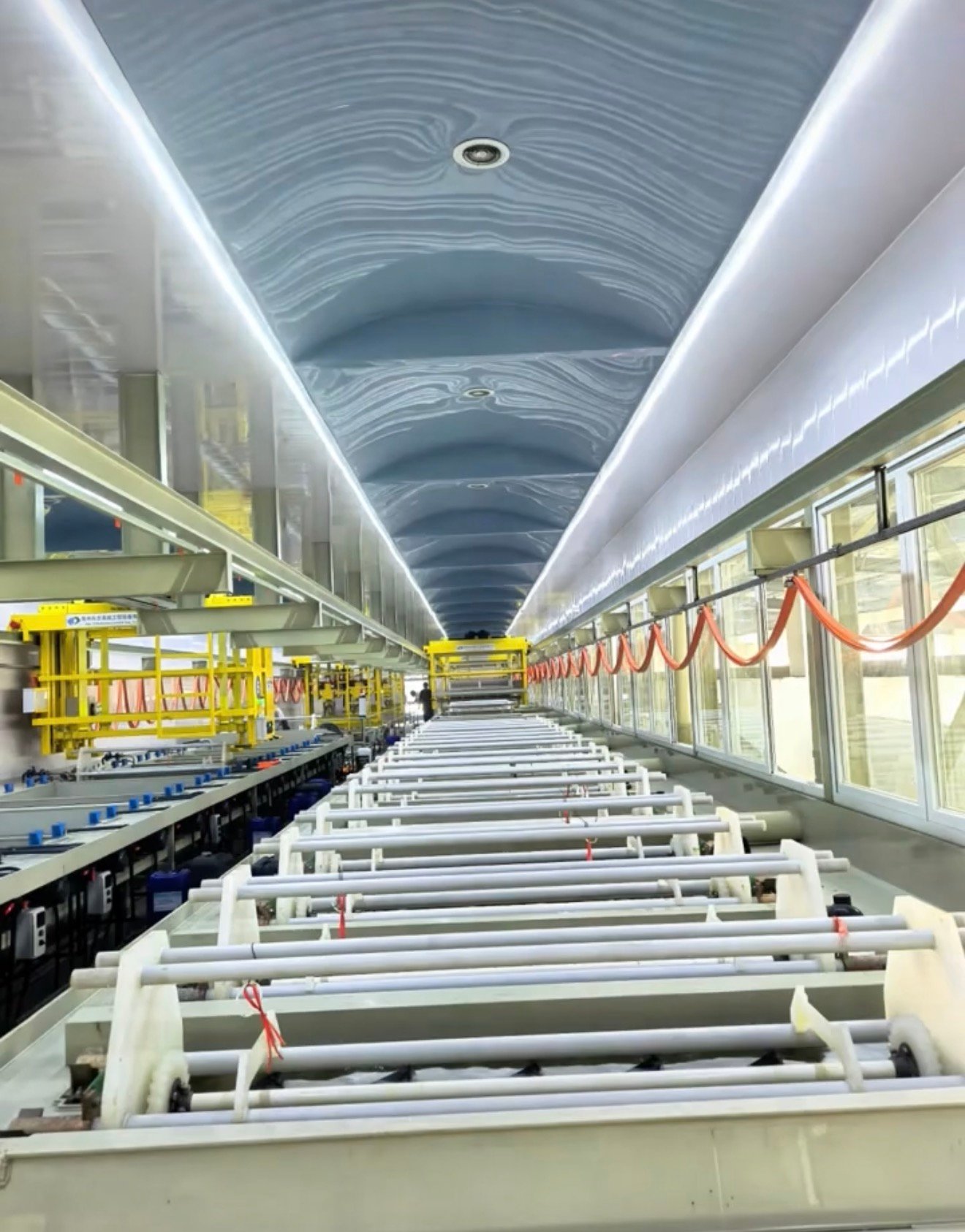
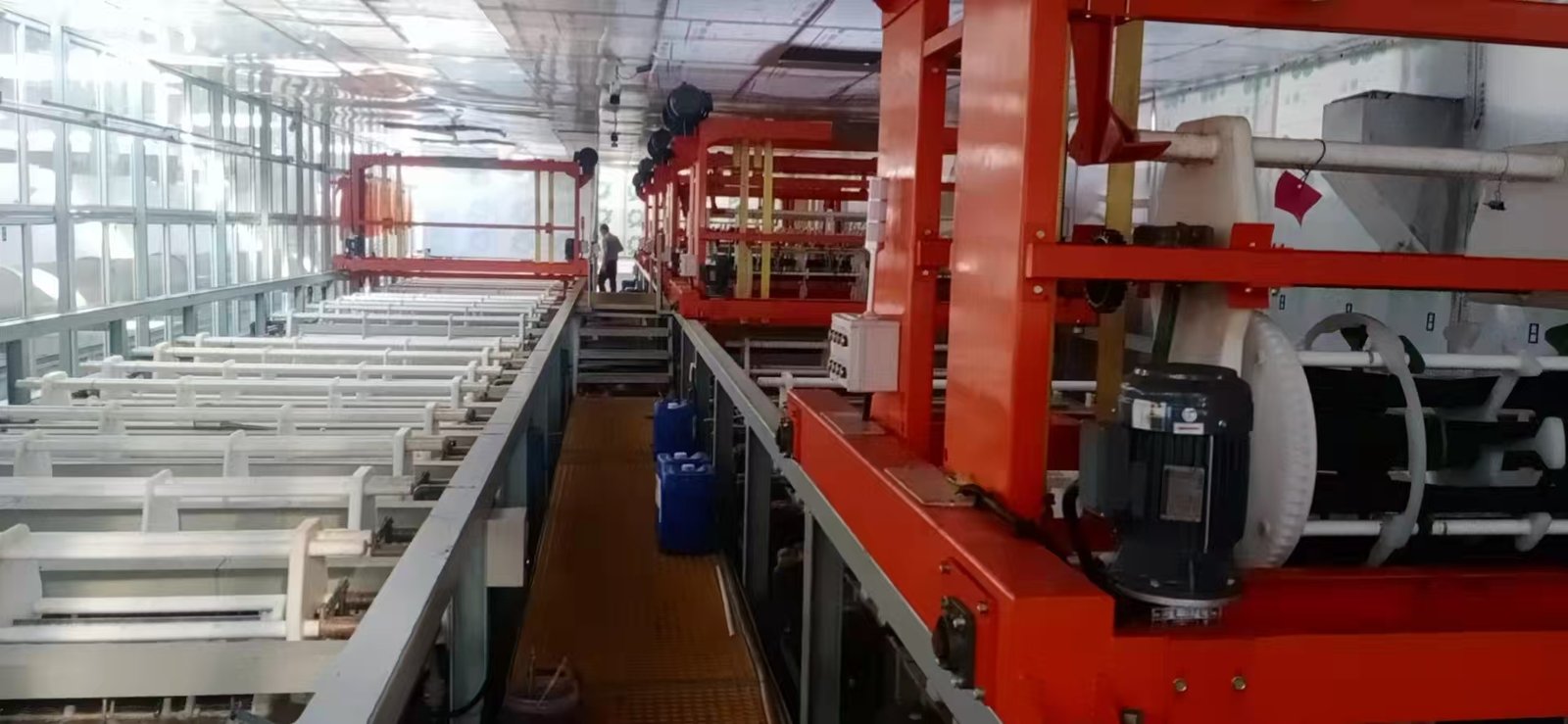
Rotary Barrel Plating Line
High-efficiency automatic barrel plating system for bulk processing of small parts. 40% higher throughput than rack plating systems. Ideal for fasteners, connectors & small hardware.
Rotary Barrel Plating System
Our rotary barrel plating line uses rotating perforated barrels to process large volumes of small parts simultaneously, delivering uniform coating with significantly higher efficiency than traditional rack plating.
Why Choose Our Rotary Barrel Line
- 40% higher throughput than rack plating
- Uniform coating on all part surfaces
- PLC controlled automatic process cycles
- PP / PVDF barrel construction
- Variable rotation speed control
- Automatic load/unload options available
- Multiple barrel sizes for different parts
- Integrated drying station optional
- Low maintenance design
- Energy-efficient drive system
- 1-year warranty with remote support
Product Images
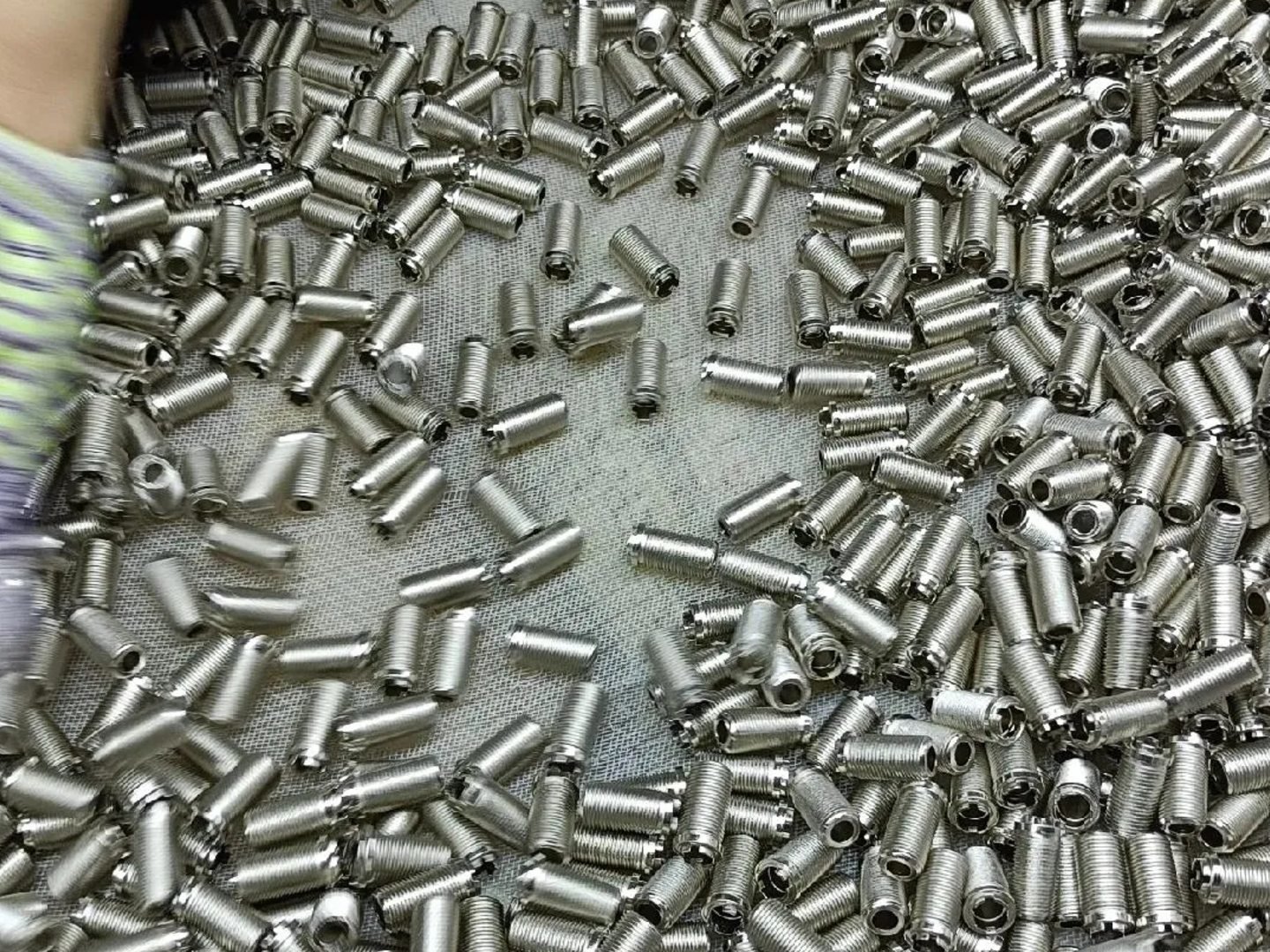
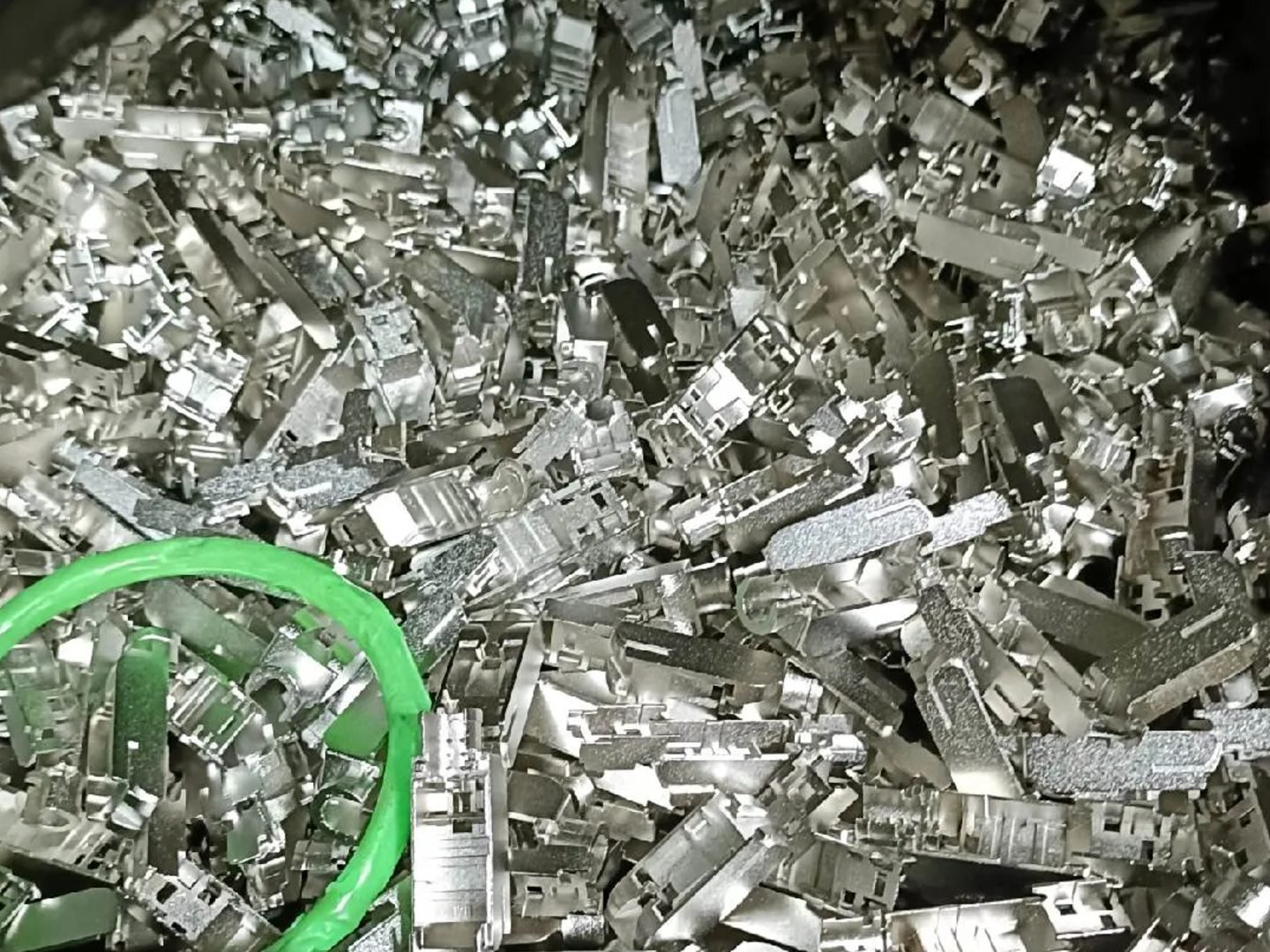
Additional views of the Rotary Barrel Plating Line
Technical Specifications
| Parameter | Specification |
|---|---|
| Model Range | TS-RB-50 to TS-RB-300 |
| Batch Capacity | 50 - 300 kg per batch |
| Barrel Material | PP (Polypropylene) / PVDF |
| Perforation Size | 1 - 6 mm (customizable) |
| Rotation Speed | 3 - 15 RPM (adjustable) |
| Control System | PLC + Touchscreen HMI |
| Process Compatibility | Zinc, Nickel, Copper, Chrome, Tin |
| Heating | Titanium heater + PID control |
| Rectifier | Integrated HF switching rectifier |
| Power Supply | 380V / 415V / 480V, 3-phase, 50/60Hz |
| Warranty | 1 year + ongoing remote support |
Ideal for Bulk Small Parts
Fasteners
Screws, nuts, bolts, washers & rivets in bulk quantities
Connectors
Electrical connectors, terminals & cable fittings
Hardware
Hinges, brackets, handles & small mechanical parts
Jewelry & Accessories
Buckles, clasps, chains & decorative items
How a Barrel Plating Line Runs
A barrel line is a sequence of stations, not one tank. The same barrel carries the same load through every stage, which is why the transfer system and the barrel itself decide the line's output more than any single tank does.
| Stage | What happens | Why it matters |
|---|---|---|
| 1. Load | Parts are loaded loose into the barrel to a set fill ratio — generally one third to one half of the barrel volume | Fill ratio decides whether the load tumbles freely or slides as a block, and is the most common cause of uneven plating |
| 2. Degrease / electroclean | Often in a dedicated cleaning barrel, or as an anodic clean in the plating barrel itself | Oil trapped between parts that touch each other survives a shortened rack pre-treatment and later appears as adhesion failure |
| 3. Rinse | Drag-out rinse, usually with a recovery or static rinse ahead of it | A barrel load carries out more solution than racked parts; the rinse stages are where the wastewater volume is set |
| 4. Plate | The barrel is lowered into the plating tank and rotated while current is applied through danglers or contact bars | Fill ratio, rotation speed, contact condition and total amperes all act on the deposit at the same time |
| 5. Recover | Solution carried out on the parts and barrel is rinsed and returned to the tank | Reduces chemical consumption and the load the wastewater plant has to treat |
| 6. Final rinse | Clean rinse before passivation or drying | Carry-over here shows up as staining and poor passivation |
| 7. Dry | Centrifugal dryer or hot-air oven; can be integrated into the line as a station | Wet parts re-oxidise, and barrel loads hold water in the gaps between parts |
| 8. Unload | Parts are discharged in bulk | Bulk handling is the reason barrel plating exists — the labour saving is at load and unload |
Choosing Barrel Size, Perforation and Load
These are the choices that decide whether the line plates evenly on your parts. They are worth settling before the order, not after commissioning.
| Parameter | What to base it on |
|---|---|
| Barrel sizes | Match barrel volume to your typical batch, not your largest order. Several interchangeable barrel sizes usually beat one large barrel, because a large barrel run part-full plates badly |
| Fill ratio | About one third to one half of barrel volume, measured by volume rather than weight. Too little and the load slides instead of tumbling; too much and the parts at the centre are starved of solution and current |
| Perforation size | Start from the smallest part in the load: the smallest perforation should generally be no larger than about a third of that part's smallest dimension. Holes that are too small slow solution exchange and drainage and increase drag-out |
| Rotation speed | Adjustable, typically in the 3–15 rpm range. Set it by watching the load — it should visibly turn over, not slide as a block and not pin to the wall |
| Barrel material | PP covers the common processes and temperatures; PVDF is chosen where higher temperature and more aggressive chemistry require it — relevant when nickel is in scope |
| Total current | Set by result, not by calculation. Load to the production fill ratio, plate a batch, and inspect parts from the centre of the load. Raise the current until centre parts are fully covered and outer parts are not yet rough |
| Contact system | Danglers and contact bars are the most neglected part of a barrel line and the most common cause of work that suddenly stops plating properly. Specify them as a maintenance item |
Barrel Plating or Rack Plating?
The decision is made by the part, not by the production target. A part that cannot tolerate the barrel is not rescued by volume.
| Factor | Barrel | Rack |
|---|---|---|
| Part size | Small — roughly under 100 mm and light enough to tumble freely | Any size, including large and heavy |
| Volume | High; thousands of pieces per shift | Low to medium |
| Surface finish | Functional or commercial; not a mirror Class A face | Class A decorative and cosmetic |
| Thickness uniformity | Wider spread across the load | Tighter and more predictable |
| Marks | Barrel marks and tumbling facets | Contact marks at the rack tips only |
| Selective plating | Not possible — the whole surface plates | Possible with masking and stop-off |
| Tangles or nests | Rules the process out | Fine when individually positioned |
| Thick functional coatings | Impractical | Standard practice |
For the full process detail — loading, perforation, current density and defect diagnosis — see Nickel Barrel Plating: Loading, Density & Defects. For very small batches of delicate parts, the miniature barrel plating machine covers 1.5–5 kg loads.
Barrel plating line: common questions
- How many parts do I need before barrel plating makes sense?
- It is volume against part size rather than a fixed number. Barrel plating wins where the racking labour per part would dominate the cost — small fasteners, connectors and small hardware in thousands. Very small batches of delicate parts are usually better served by a miniature barrel unit or by rack plating.
- Can one barrel line run several different processes?
- Yes. Zinc, nickel, copper, tin and trivalent chrome barrel processes are all run on the same style of line, with the barrel, contacts and tanks specified for the chemistry. The bath, the barrel material and the wastewater stages change between processes; the mechanical line does not.
- Why does the barrel matter so much for nickel specifically?
- Because nickel has poorer throwing power than zinc, and throwing power is exactly what covers the parts sitting in the middle of a barrel load. A zinc barrel forgives a slightly overloaded barrel; a nickel barrel does not, so fill ratio and rotation need more attention.
- What is the difference between this line and the miniature barrel machine?
- Batch size and automation. The miniature barrel plating machine handles 1.5–5 kg loads and suits small batches, sampling and delicate parts. This rotary barrel line runs interchangeable barrels from 50 to 300 kg per batch with PLC control of the process cycle and transfer.
- What do you need from me to specify a line?
- Part samples or drawings with the smallest dimension of each part, your batch quantity per shift, the coating and thickness specification, and your available footprint and power supply. The smallest part dimension is what drives the perforation choice, so it is the detail worth getting right first.
Need a Rotary Barrel Plating Line?
Contact us with your production requirements — we'll recommend the ideal barrel plating configuration within 24 hours.